Carbon Contact Strip
Main Features
Real-Time Multi-Parameter Monitoring
Equipped with integrated sensors (fiber-optic temperature, contact force, hard spot detection) to simultaneously track strip temperature, pantograph-catenary contact force, catenary irregularities, cracks, and wear in real time.
Data Integration and Intelligent Analysis
Collects and transmits data via fiber-optic analyzers to onboard or centralized systems, where it is fused with operational data (speed, location, time) and analyzed to provide actionable insights through software platforms or mobile apps.
Enhanced Safety and Lifecycle Efficiency
Improves operational safety and reliability while enabling predictive maintenance to reduce lifecycle costs, serving as a key enabler for the digitalization of rail transit systems.
The pantograph is a core electrical device for rail transit vehicles such as electric locomotives, high-speed trains, urban rail trains, and subways to draw power from the catenary. Installed on the roof of the train, it serves as a key component connecting the catenary and the train’s power supply system.
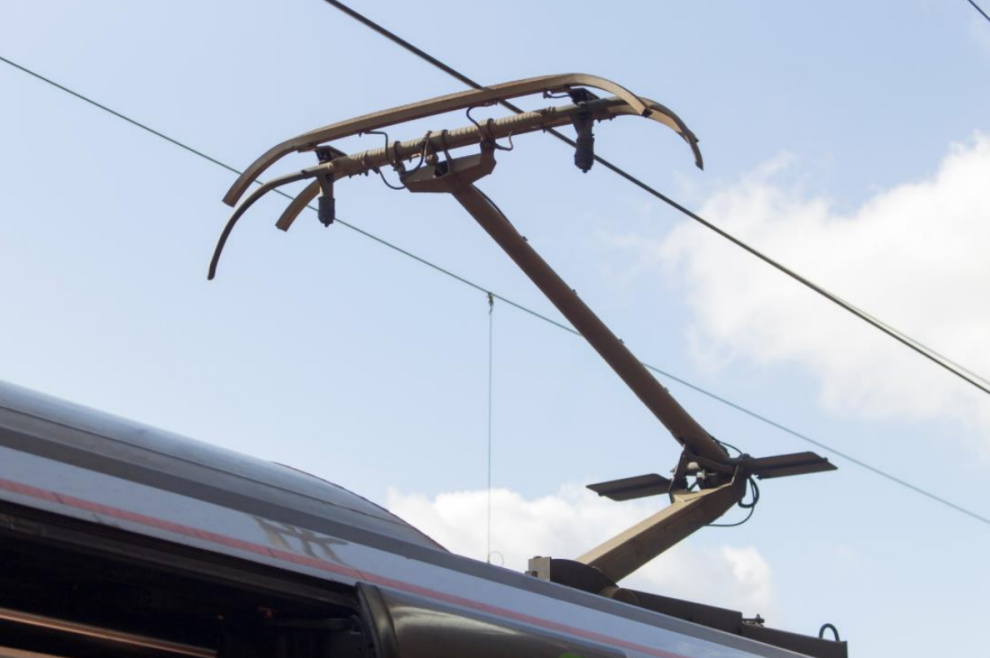
Pantograph
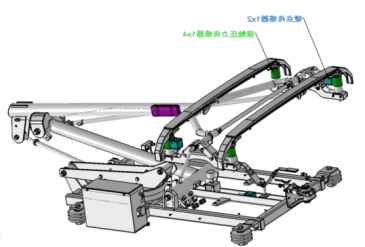
Pantograph
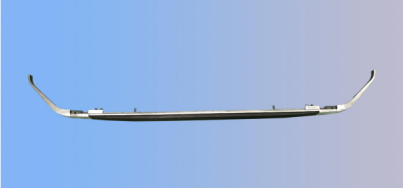
As the core part of the pantograph, the carbon contact strip (or carbon slide plate) mainly functions to stably transmit electrical energy to the train through direct contact with the catenary wires, providing power for the train’s operation.
Carbon Contact Strip
The intelligent carbon contact strip is equipped with integrated sensors, data transmission, and analysis functions. Its core function lies in achieving the dual goals of “power transmission + intelligent condition management”.
Composed of a carbon contact strip, optical fiber temperature sensors, integrated contact force and hard spots sensors, optical cables, optical fiber analyzers, OSA software, and a mobile APP, the intelligent carbon contact strip enables real-time monitoring of key parameters including strip temperature, pantograph-catenary contact force, catenary hard spots, strip cracks, and strip wear. Monitoring data is transmitted in real time: optical fiber analyzers upload the data to the on-board system or data center, which processes the information by integrating vehicle operation data (such as time, speed, and positioning). Processed results are then pushed to clients or the mobile APP, providing accurate data support for vehicle operation and maintenance (O&M).
Not only does it enhance the safety and reliability of train operation, but it also reduces the whole-life cycle cost through precise O&M. Additionally, it will serve as a key enabler for the digital transformation of the rail transit
industry.
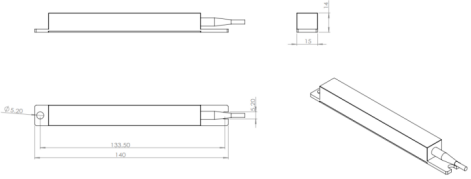
Integrated Contact Force and Hard Spots Sensor
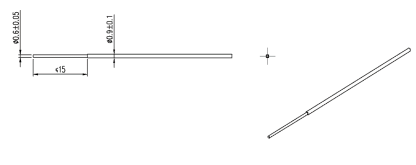
Fiber Optic Thermometer Sensor
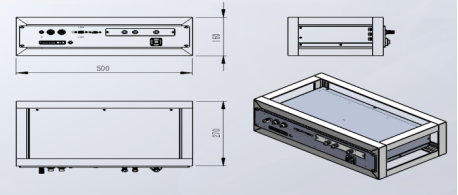
Optical Fiber Analyzer
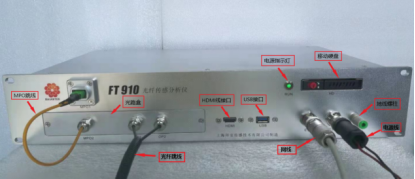
Optical Fiber Analyzer
The intelligent carbon contact strip has obtained over 380 patent technologies and completed a full range of industry-related certifications. It has been widely applied to numerous train fleets all over the world, such as the Beijing EMU (Electric Multiple Unit), Guangzhou EMU, Shanghai Railway Administration, Xi’an Railway Administration, Tianjin Metro, Fuzhou Metro, and the Mecca Light Rail in Saudi Arabia. Operational data confirms that the product has reached an internationally advanced level in terms of quality.