Other Components
It includes secondary equipment used in the power system for monitoring, controlling, protecting, and measuring the operating status of primary equipment (such as generators, transformers, switches), insulators, and other power-related devices.
Smart Meter
Smart Meter
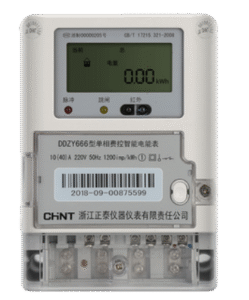
A Smart Meter is an advanced digital energy metering device that integrates energy measurement, data communication, and intelligent control functions.
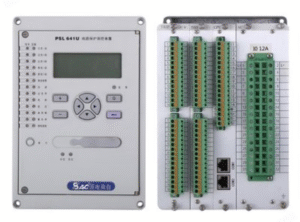
Relay Protection Device
A Relay Protection Device is a critical safety control system for power grids and electrical equipment, designed to detect faults (e.g., short circuits, overloads, insulation failures) in real time and trigger rapid tripping of circuit breakers to isolate faulty sections. It integrates protective relaying, measurement, communication, and control functions, operating based on electrical parameters (current, voltage, frequency, power factor) and logical judgments.
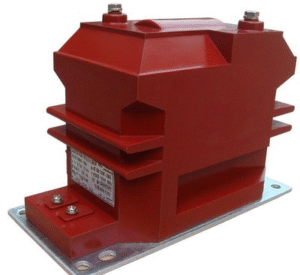
Potential Transformer (PT)
A Potential Transformer (PT) (also known as a Voltage Transformer, VT) is a specialized instrument transformer designed to convert high-voltage (HV) signals into standardized low-voltage signals (typically 100V AC or 100/√3 V AC) for measurement, protection, and control purposes in power systems.
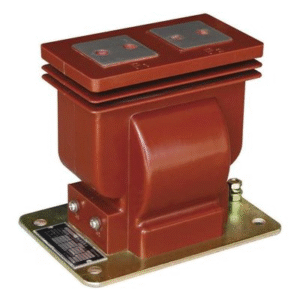
Current Transformer (CT)
A Current Transformer (CT) is a critical instrument transformer designed to convert high primary currents (up to 6300A) into standardized low secondary currents (typically 1A or 5A AC) for measurement, protection, and control in power systems. Operating on the principle of electromagnetic induction, it features a primary winding (connected in series with the high-current circuit) and a secondary winding (connected to meters, relays, or intelligent devices), ensuring electrical isolation between high-voltage circuits and low-voltage control systems.
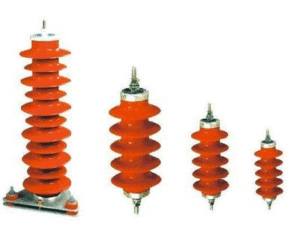
Surge Arrester
Surge Arrester
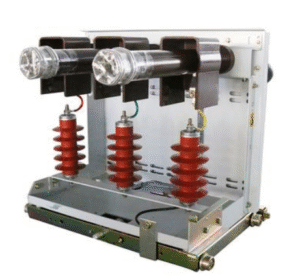
A Surge Arrester is a critical protective device designed to limit transient overvoltages (e.g., lightning strikes, switching surges) in power systems and electrical equipment. Installed in parallel with protected equipment (transformers, switchgear, transmission lines), it features a non-linear resistance element (e.g., metal oxide varistor, ZnO) that remains high-impedance under normal operating voltages but rapidly switches to low-impedance when overvoltage exceeds a threshold, diverting surge currents to the ground.
High-voltage Fuse
High-voltage Fuse
A High-voltage Fuse is a critical overcurrent protection device designed for medium/high-voltage power systems . It operates on the principle of thermal melting: when the current exceeds a preset threshold (overload or short-circuit), the fuse link (made of low-melting-point alloy, e.g., silver-copper) melts rapidly, interrupting the circuit within milliseconds (≤10ms) to isolate faulty components.
Insulator
Insulator
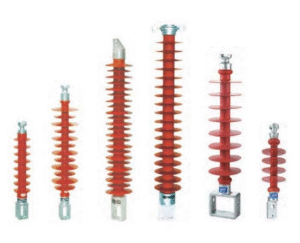
A Power Insulator is a specialized insulating device used in power systems (voltage levels from 3kV to 1100kV and above). Its core function is to provide reliable electrical insulation isolation between conductors and ground (or conductors at different potentials) while withstanding mechanical loads (e.g., conductor weight, wind load, ice-snow load). Made of high-resistivity materials, it blocks leakage current paths and features sufficient mechanical strength to fix and support conductors and equipment terminals, ensuring the safe and stable operation of power transmission/distribution systems and preventing faults such as short circuits and flashovers.
Vacuum Arc-extinguishing Chamber
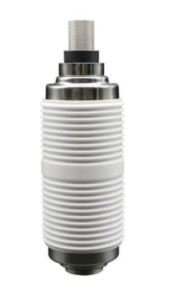
A Vacuum Arc-extinguishing Chamber (also known as Vacuum Interrupter) is a core component of vacuum switchgear (e.g., vacuum circuit breakers, vacuum contactors) designed for medium/high-voltage power systems (3kV~40.5kV mainstream). It consists of a hermetically sealed ceramic or glass envelope containing two separable contacts, evacuated to a high vacuum level. When the contacts open under load, the vacuum environment rapidly extinguishes the electric arc (arc-extinguishing time ≤20ms) due to its high insulation strength and low arc conductivity.