
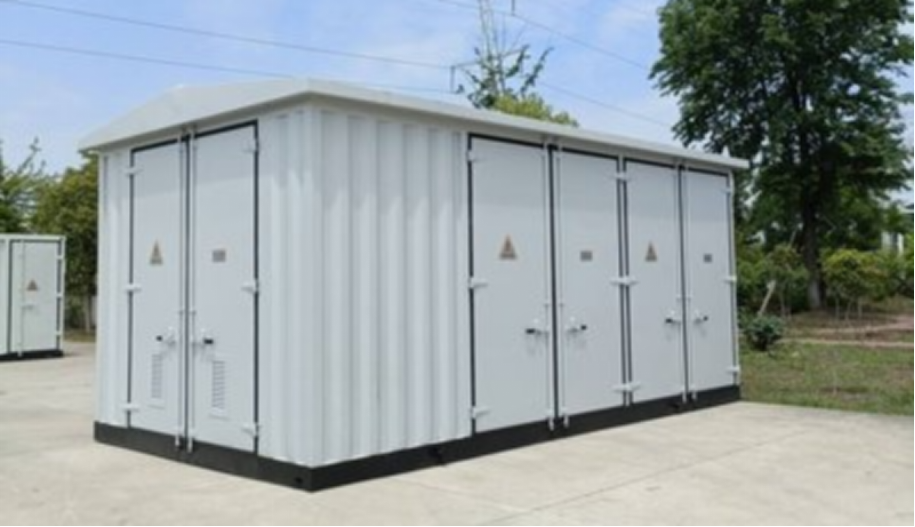
Pad-mounted Substation
Main Features
Fully Integrated and Compact Design
Combines high-voltage intake, voltage transformation, low-voltage distribution, and protection systems into a single sealed enclosure, significantly saving space and eliminating the need for a separate substation building.
Factory-Prefabricated and Rapid Installation
Manufactured and tested as complete modular units in the factory, ensuring quality and enabling fast on-site deployment with minimal assembly time.
Highly Adaptable and Widely Applicable
Suitable for diverse scenarios including urban residential areas, commercial districts, office buildings, as well as industrial parks and factories, providing flexible and efficient power distribution solutions.
Transformers are core equipment in power systems. Based on the principle of electromagnetic induction, they realize the increase (step-up) or decrease (step-down) of AC voltage, ensuring the long-distance transmission of electrical energy and the safe use of terminal equipment.
According to voltage level, phase number, cooling method, application, structural characteristics, etc., power transformers can be classified into various types, structures, and specifications, such as oil-immersed/dry-type transformers, step-up/step-down transformers, single-phase/three-phase transformers, and pad-mounted substations.
Based on user requirements, we can provide cost-effective solutions for the transformers.
A Pad-Mounted Substation (commonly known as a “containerized substation”), is a prefabricated complete power distribution equipment that integrates core components such as high-voltage switchgear, transformers, low-voltage distribution devices, and protection & measurement and control systems into a sealed metal enclosure.
Its core features include factory prefabrication, modular integration, and rapid on-site installation. Through a compact design, it achieves the integration of functions such as high-voltage power reception, voltage conversion (step-up/step-down), low-voltage power distribution, and protection & control, eliminating the need for constructing separate traditional open-type substations.
As an efficient, flexible, and environmentally friendly power supply solution in power distribution networks, it is mainly applied in scenarios such as terminal power distribution for urban residential areas, commercial streets, and office buildings (replacing traditional power distribution rooms to save space), as well as primary power supply for large and medium-sized industrial parks and factories (quickly meeting the power supply needs of new loads).